

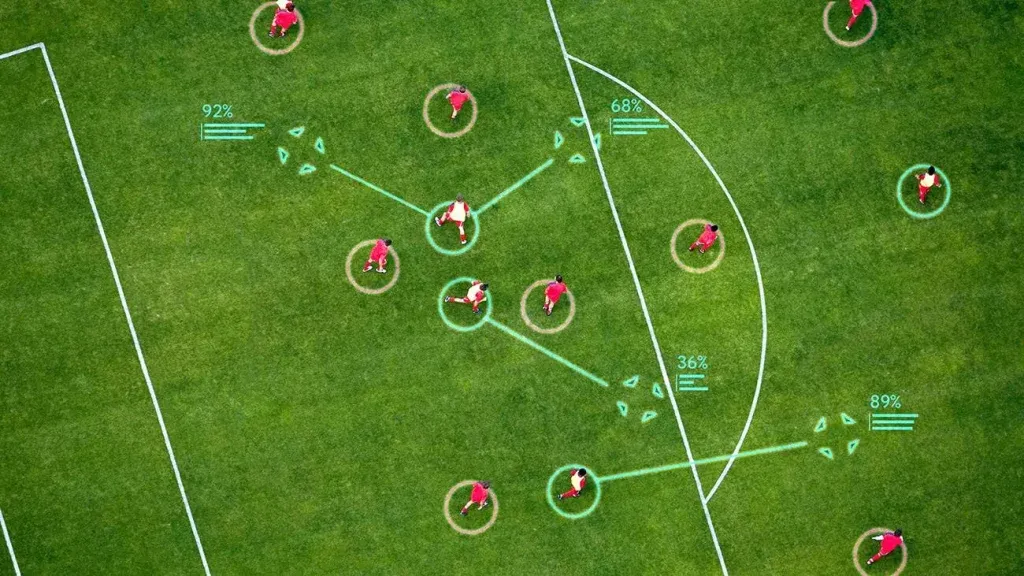
Football tactics are the invisible decisions that turn a group of players into a winning team. I learned this the hard way years ago, watching a local match where one team had better dribblers, stronger shots, and faster runners… yet still lost 2–0. Why? Because the winning side didn’t play harder—they played smarter.
They knew when to press, when to slow the game down, how to trap opponents near the touchline, and how to create chances without forcing risky passes. That day, it became clear: tactics aren’t just for elite clubs. They’re for anyone who wants to understand football deeply—players, coaches, fans, and even casual viewers who want to stop saying, “They just wanted it more.”
This guide breaks down tactical ideas in a friendly, real-world way. No complicated diagrams. No academic talk. Just practical understanding, like a coach explaining it on the sidelines.
What Football Tactics Actually Mean (In Real Match Terms)
People often think tactics mean “formation.” But tactics are bigger than that. A formation is the starting shape on paper. Tactics are what happens after the whistle blows.
For example, a team might start in a 4-3-3, but when defending they become a compact 4-5-1. When attacking, the fullbacks push high and it looks like a 2-3-5. That’s not confusion—it’s modern football.
Tactics cover things like how a team builds from the back, where they want to win the ball, how they defend crosses, and what kind of chances they want to create.
In simple words, tactics answer three questions:
How do we attack?
How do we defend?
What do we do the moment we lose or win the ball?
And those moments—especially transitions—often decide games.
The Most Common Formations (And Why They Work)
Formations are popular because they create balance. They give players reference points, especially in pressure situations. But the best teams don’t worship a formation—they use it like a tool.
A 4-4-2 is still powerful because it’s compact and simple. Two banks of four make defending natural, and two strikers can press and counter quickly.
A 4-3-3 is popular because it stretches the pitch. Wingers can isolate fullbacks, and the midfield triangle offers control. But it also demands smart positioning, because spaces can open if the press fails.
A 3-5-2 or 3-4-3 is loved by teams that want width from wingbacks and extra defenders to build play. It can feel aggressive and safe at the same time—if the wingbacks have stamina and discipline.
The key isn’t picking a “best” formation. It’s choosing one that matches your players and your plan.
Football tactics in Attack: Creating Chances Without Chaos
Good attacking teams don’t just run forward. They create advantages—small ones, repeated again and again—until a big chance appears.
One major goal is to create overloads. That means having more players in a zone than the opponent can handle. It could be a 3v2 on the wing or a 2v1 in midfield. Overloads force defenders to make choices, and choices create mistakes.
Another idea is stretching the pitch. When your wingers stay wide, defenders must spread out. That opens gaps in the middle. When attackers stay narrow, defenders collapse inward, and the wings become free.
Even something as simple as switching the play can break a defense. If a team is defending compactly on one side, a quick diagonal pass can create a crossing chance before the defense resets.
The best attacks feel patient but dangerous. They don’t rush. They pull defenders out of shape, then strike.
Build-Up Play: The Calm Start That Leads to the Killer Finish
Build-up play is how teams move the ball from defense to midfield to attack. It looks slow sometimes, but it’s not “wasting time.” It’s creating the right moment.
Some teams build short, using the goalkeeper and center-backs to attract pressure. Once the opponent presses high, space opens behind them. One clean pass through midfield, and suddenly it’s a 3v3 attack.
Other teams build direct, playing long early to win second balls. This is often misunderstood as “old school,” but it can be extremely modern when done with structure. The key is having midfielders ready to collect knockdowns and wide players positioned to attack quickly.
A smart build-up depends on the opponent. If they press aggressively, you may need quick combinations. If they sit deep, you need movement between lines.
Pressing: Winning the Ball Before the Opponent Can Breathe
Pressing is one of the most exciting parts of today’s game. It’s also one of the most exhausting.
Pressing isn’t just running at the ball. It’s organized pressure, with clear triggers. A trigger could be a bad touch, a back pass, or a pass into a player facing their own goal.
When a press works, it feels like a trap. The opponent thinks they have an easy pass, but suddenly every option is covered. The ball is won, and the attacking team is already close to goal.
High pressing is risky because it leaves space behind. If the opponent breaks the press, they can counter with speed. That’s why the best pressing teams also have strong defenders and a goalkeeper comfortable sweeping behind the line.
Some teams press high for 10 minutes, then drop into a mid-block to recover. That mix keeps opponents guessing and saves energy.
Low Block vs Mid Block: Defending With Intelligence
Not every team can press high for 90 minutes. And honestly, not every team should.
A low block means defending deep near your penalty box, staying compact, and protecting central areas. It can frustrate even the best attackers, especially when the defending team stays disciplined.
A mid block is a middle ground. You allow the opponent to have the ball in harmless areas, then press when they enter certain zones. It’s less tiring than constant high pressing, but still aggressive enough to win the ball.
The biggest mistake teams make when defending deep is becoming passive. A low block doesn’t mean “do nothing.” It means controlling space, forcing wide passes, and blocking shooting lanes.
Great defending isn’t about sliding tackles and hero moments. It’s about making the opponent feel like there’s no room to breathe.
Transitions: The 5 Seconds That Decide Matches
If you watch top football closely, you’ll notice something: the moment the ball changes possession, everything changes instantly.
When you win the ball, you either counter quickly or secure possession. When you lose it, you either press immediately or drop into shape.
That first decision—made in seconds—often decides the match.
A fast counterattack is deadly because the opponent is stretched. Their fullbacks may be high. Their midfield may be ahead of the ball. If you attack immediately, you can create a clear chance with just two or three passes.
But counters only work if players understand spacing. If everyone sprints forward in a straight line, it becomes predictable. The best counters have width, a central runner, and a player arriving late for the cutback.
On the other side, “counter-pressing” is when a team tries to win the ball back instantly after losing it. It’s like refusing to let the opponent breathe. Many modern teams use this to keep control and prevent counters.
Football tactics for Controlling Midfield: The Real Battle Zone
Midfield is where games are won quietly. You won’t always see it on highlight reels, but you’ll feel it in the flow of the match.
A team that controls midfield controls tempo. They decide when to speed up, when to slow down, and where the ball moves next.
One key concept is “playing between the lines.” This means placing a player in the space between the opponent’s midfield and defense. If that player receives the ball on the half-turn, the defense is in trouble.
Another key is the “pivot.” A pivot is usually a defensive midfielder who connects play and protects the defense. Some teams use one pivot. Others use two. A double pivot can offer more stability, especially against strong counterattacking teams.
Midfield control isn’t just about passing. It’s about positioning. A player can control a game without touching the ball for 30 seconds, simply by standing in the right space and blocking the opponent’s options.
Width, Wingers, and Fullbacks: How Modern Teams Stretch Defenses
Width is a weapon. It forces defenders to spread out, which opens spaces inside.
Traditional wingers stay wide and beat fullbacks. But modern football has more variety. Sometimes wingers cut inside like forwards. Sometimes fullbacks overlap and provide width instead. Sometimes fullbacks move into midfield, creating extra passing options.
The best wide play isn’t just crossing. It’s timing. If a cross comes too early, defenders clear it. If it comes too late, the moment is gone.
Cutbacks are especially dangerous today because defenses often drop deep to protect the goal. When the ball is pulled back to the edge of the box, attackers can shoot with space and balance.
Wide play becomes even more effective when combined with smart movement in the box. One runner attacks the near post, one attacks the far post, and one arrives late. That structure creates confusion and finishing opportunities.
Set Pieces: The “Free Goals” Smart Teams Don’t Ignore
Set pieces are not boring. They are a tactical goldmine.
Corners, free kicks, and throw-ins can decide tight matches. Many games at every level are won by one set-piece goal, especially when open play chances are limited.
Teams now use creative routines: blockers, decoy runs, short corners, and late runners. Defending set pieces also requires planning. Do you mark zonally or man-to-man? Do you leave players forward for counters or keep everyone back?
A well-drilled set-piece plan can turn an average team into a dangerous one. It’s one of the fastest ways to improve results because it’s repeatable and trainable.
Even at amateur level, set pieces can be the difference between finishing mid-table and fighting for trophies.
Tactical Flexibility: The Teams That Adapt Win More
Some teams lose because they only have one plan. When that plan fails, they panic.
Tactical flexibility means having solutions. If your short build-up is being pressed, you need a direct option. If your winger is isolated, you need an overlap or underlap. If the opponent blocks the middle, you attack wide. If they block wide areas, you use central combinations.
The best coaches adjust during the match. Sometimes it’s a small change, like moving a midfielder higher. Sometimes it’s a bigger shift, like switching from a back four to a back three.
Even players can adjust on the pitch. A smart striker might drop deeper to pull a defender out. A midfielder might drift wide to create a passing lane. These small movements are tactical decisions, even without a substitution.
Football rewards the teams that read the game like a story, not like a script.
How to Read a Match Like a Coach (Even If You’re a Fan)
Once you start noticing patterns, football becomes more enjoyable. You stop watching only the ball and start watching the spaces around it.
Try looking at:
Where is the opponent’s defensive line?
Are the fullbacks high or deep?
Is the midfield compact or stretched?
When the ball is lost, do they press or drop?
You’ll quickly see why some teams look “comfortable” and others look rushed.
One fun habit is to watch the first 10 minutes carefully. Teams often show their plan early. Are they pressing high? Are they sitting deep? Are they attacking down one side more than the other?
As you notice these things, you’ll understand why certain substitutions happen, why some players look quiet but important, and why a match can change with one tactical tweak.
Common Tactical Mistakes Teams Make (And How to Fix Them)
One of the biggest mistakes is pressing without support. If one player presses and the rest stay back, the opponent can pass around easily. Pressing must be coordinated, or it becomes wasted energy.
Another mistake is attacking with no structure. If everyone runs forward, the team loses shape and becomes vulnerable to counters. The best attacks keep balance, with players positioned to stop counterattacks.
Teams also struggle when they don’t use the half-spaces. These are the channels between the center and the wing. Attacking through half-spaces is difficult to defend because it creates both shooting and passing angles.
Finally, many teams fail to manage momentum. Sometimes the smartest move is slowing the game down after scoring. Sometimes it’s keeping pressure high to score again. Momentum management is tactical maturity.
Why Football Tactics Matter More Than Ever Today
Football has become faster, smarter, and more detailed. Players are fitter, pressing is more intense, and small mistakes are punished instantly.
That’s why tactics matter. They reduce chaos. They create repeatable chances. They protect weaknesses and maximize strengths.
A team with average players but strong tactical discipline can beat a team full of stars who don’t work together. We’ve seen it at every level—from local leagues to international tournaments.
And once you understand tactics, you don’t just watch football—you read it.
You notice the traps, the patterns, the clever runs, the compact defending, and the moments when a coach’s idea becomes a goal.
That’s the beauty of the game: it’s not only played with feet. It’s played with minds.
Read also:
northeast united fc vs mumbai city fc lineups
kerala blasters vs jamshedpur fc lineups
bengaluru fc vs roundglass punjab fc lineups
kerala blasters vs chennaiyin fc player ratings
